By Alexis Nagy, Research Assistant
The United Nations Commission of Inquiry (“COI”) on the Occupied Palestinian Territory, including East Jerusalem, and Israel was established by the UN Human Rights Council in 2021. The COI has been widely criticized as one-sided, giving “disproportionate” attention to Israel.
The COI issued a report in September 2025 entitled: Legal analysis of the conduct of Israel in Gaza pursuant to the Convention on the Prevention and Punishment of the Crime of Genocide. According to the Commission, Israeli authorities have committed genocide in Gaza. It concluded:
252. The Commission concludes on reasonable grounds that the Israeli authorities and Israeli security forces have committed and are continuing to commit the following actus reus of genocide against the Palestinians in the Gaza Strip, namely (i) killing members of the group; (ii) causing serious bodily or mental harm to members of the group; (iii) deliberately inflicting on the group conditions of life calculated to bring about its physical destruction in whole or in part; and (iv) imposing measures intended to prevent births within the group.
253. On incitement to genocide, the Commission concludes that Israeli President Isaac Herzog, Prime Minister Benjamin Netanyahu and then Defence Minister Yoav Gallant, have incited the commission of genocide and that Israeli authorities have failed to take action against them to punish this incitement. The Commission has not fully assessed statements by other Israeli political and military leaders, including Minister for National Security Itamar Ben-Gvir and Minister for Finance Bezalel Smotrich, and considers that they too should be assessed to determine whether they constitute incitement to commit genocide.
254. On the mens rea of genocide, the Commission concludes that statements made by Israeli authorities are direct evidence of genocidal intent. In addition, the Commission concludes that the pattern of conduct is circumstantial evidence of genocidal intent and that genocidal intent was the only reasonable inference that could be drawn from the totality of the evidence. Thus, the Commission
concludes that the Israeli authorities and Israeli security forces have had and continue to have the genocidal intent to destroy, in whole or in part, the Palestinians in the Gaza Strip.
255. The Commission concludes that the State of Israel bears responsibility for the failure to prevent genocide, the commission of genocide and the failure to punish genocide against the Palestinians in the Gaza Strip.
The Sidoti-Cox debate
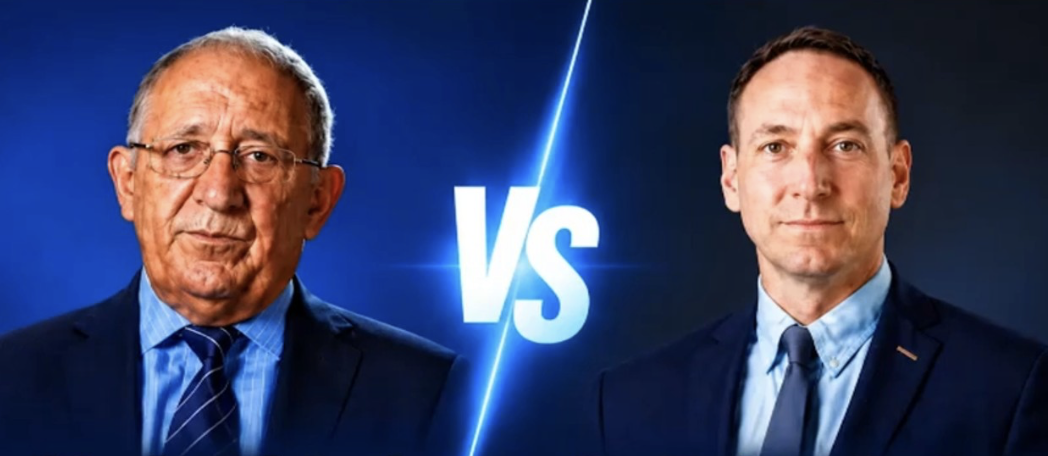
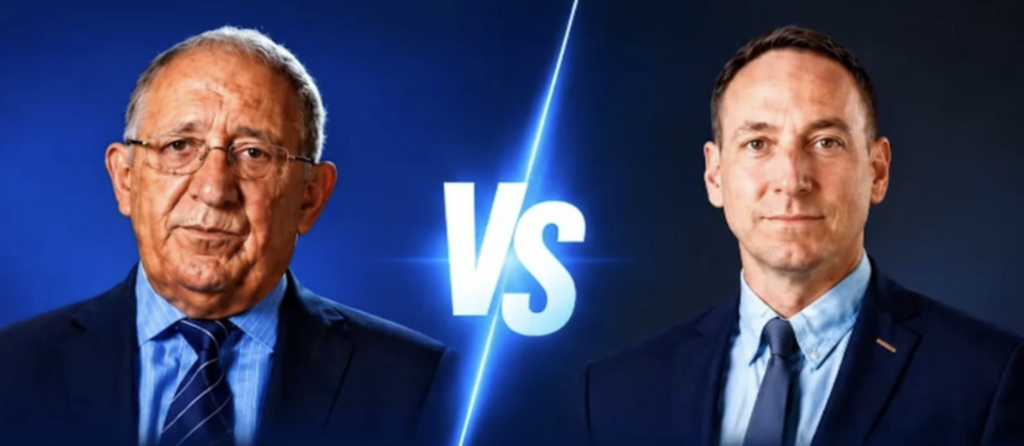
In a landmark public debate in Melbourne on 8 October 2026, moderated by Australian lawyer and defence analyst Dr. Glenn Kolomeitz, UN Commissioner Chris Sidoti spoke face-to-face with Dr Brian Cox, a former US military lawyer and international law academic. Cox’s operational experience exposed fundamental shortcomings over the Commission’s application of international law.
During the course of the debate Sidoti openly admitted a range of weaknesses in the Commission’s findings. In summary:
- The widely circulated casualty classification of 83% was not independently established.
- Political statements were challenged through an unreasonably narrow interpretation.
- Military operations were assessed without adequate consideration of the operational circumstances.
- Evidentiary material remained beyond independent public scrutiny.
- A central allegation involving the destruction of reproductive material encountered unanswered questions about causation, chronology and intent.
The Commission relied on unverified casualty numbers
Sidoti was confronted with a simple question: had the Commission independently established that (as claimed by the Commission) 83% of Palestinians killed in Gaza were civilians, as stated in its September 2025 genocide report? His answer was unequivocal: “No we didn’t because we don’t have that information.”
It was an extraordinary admission from a member of the UN body responsible for one of the gravest accusations in international law. The admission stands in stark contrast to assurances given by the Commission’s former chair, Navi Pillay, who declared in October 2025: “We have not included anything that we didn’t personally investigate and verify.” Yet Sidoti conceded that the Commission had not independently established the civilian-combatant classification underpinning its widely cited statistic. If every fact was personally investigated and verified, how did an unverified casualty classification find its way into a report accusing Israel of genocide?
And this was only one of several serious weaknesses exposed during the evening. In a subsequent interview with thinc. director Andrew Tucker, debate moderator Dr Glenn Kolomeitz, an Australian international lawyer and defence analyst, delivered a scathing assessment of the Commission’s findings. Dr Kolomeitz challenged the Commission’s evidentiary standards, its interpretation of military operations and its reliance on disputed assumptions to infer genocidal intent.
Having observed Sidoti both at the Melbourne debate and during an earlier National Press Club appearance, Dr Kolomeitz criticised his reliance on lengthy anecdotes in place of rigorous scrutiny of the facts and applicable law. Drawing on his experience in intelligence analysis, Dr Kolomeitz further accused the Commission of transforming assumptions derived from sources of questionable reliability into purported facts, before relying on those same assumptions to substantiate its extraordinary accusation of genocide.
The Commission’s Genocide Finding is Built on a Lower Standard of Proof
At the centre of Dr Kolomeitz’s criticism is the disparity between the gravity of the Commission’s accusation and the evidentiary standard used to substantiate it. The Commission concluded that Israel had committed genocide using a threshold of reasonable grounds to conclude, substantially lower than the criminal standard of proof beyond reasonable doubt. During the debate, Sidoti repeatedly emphasised that the Commission was not a court and did not apply criminal standards of evidence. Dr Kolomeitz challenged the implications in his subsequent interview. While fact-finding bodies operate under lower evidentiary thresholds, their conclusions can acquire the authority of judicial determinations when repeated by governments, media organisations and international institutions. The Commission is not a court, yet its conclusions are presented to the world with the unmistakable authority of a genocide verdict. For Dr Kolomeitz, the problem is compounded by the Commission’s reliance on disputed factual assumptions and what he considers an inadequate understanding of military operations.
The Commission’s most consequential failure, however, concerns its reasoning on genocidal intent. Article II of the Genocide Convention requires a specific intention to destroy a protected group, in whole or in part, as such. Where that intention is inferred from conduct, genocide must be the only reasonable inference availablewith Sidoti acknowledging this demanding test during the live debate. Yet the Commission concluded at paragraph 179 that “there was no military necessity to justify the pattern of conduct” of Israeli operations in Gaza. Astonishingly, Sidoti advanced the extraordinary proposition that even if eliminating Hamas was Israel’s military objective, genocide could have been the strategy employed to achieve it.
Dr Kolomeitz challenged how investigators could eliminate competing explanations without adequately examining military objectives, targeting decisions, weapons and operational tactics with a devastatingly simple question: “How many inferences have they ignored?” Dr Cox went on to challenge the Commission’s failure to adequately exclude an obvious alternative explanation: Israel was conducting military operations against Hamas, the terrorist organisation responsible for the 7 October atrocities and the continuing threat to Israeli security. This problem extended to the Commission’s interpretation of Israeli leaders’ statements. Dr Cox demonstrated how former Defence Minister Yoav Gallant’s reference to fighting “human animals” was interpreted as evidence of genocidal intent, despite his argument that its immediate context concerned Hamas. Likewise, Benjamin Netanyahu’s biblical reference to Amalek was deployed as evidence of annihilatory intent, while Dr Cox drew attention to surrounding statements explicitly identifying Hamas as the enemy and the destruction of its military capabilities, recovery of hostages and restoration of Israeli security as the objectives. The criticism of the Commission’s findings is devastating in its simplicity. But a conclusion of genocide cannot be the only reasonable inference if competing explanations have not been properly examined and excluded. The Commission’s reasoning is therefore open to a fundamental challenge, has it established genocidal intent through evidence, or inferred it from the consequences of warfare without sufficiently examining alternative explanations.
International Humanitarian Law
Dr Cox’s examination of the Commission’s military-law analysis exposed another serious deficiency: the repeated invocation of legal principles without adequately demonstrating how their requirements had been breached. The Commission cited distinction, proportionality, military necessity and precautions when condemning Israeli operations. But Dr Cox identified passages in which those principles were invoked without sufficiently explaining their operative legal tests. As Dr Cox observed, “You can’t just put a word on a page and then say that that is the rule.” Proportionality, for example, is not determined by counting casualties or surveying destroyed buildings. It concerns the civilian harm reasonably expected before an attack, assessed against the concrete and direct military advantage anticipated at that time. That is an important distinction because the Commission’s conclusions repeatedly depend on interpreting the consequences of military operations as evidence of unlawful or genocidal intent. Dr Cox also challenged the treatment of Israel’s use of heavy explosive weapons. International law does not impose a general prohibition on such weapons in populated areas. The 2022 international political declaration on their use expressly recognised that distinction. Nor can the military consequences of fighting Hamas be assessed while disregarding Hamas’s methods of warfare, including its extensive tunnel infrastructure and operations within densely populated areas. Hamas’ tactics shaped the battlefield in Gaza, and ignoring those tactics distorts the legal assessment of the fighting that follows. Dr Cox also identified military techniques overlooked in the Commission’s analysis, including delayed-fuse munitions designed to direct explosive force underground and reduce wider civilian harm. These operational details provide important evidence relevant to the purpose, precautions and anticipated effects of an attack. The Commission’s approach, as challenged by Dr Cox, transforms the destruction caused by war into proof of intention while simultaneously neglecting the military decisions necessary to explain how and why that destruction occurred.
Evidence That Cannot Be Independently Examined
The Commission’s lack of transparency compounds these methodological weaknesses. Dr Cox challenged its reliance on material investigators claimed to have examined but did not adequately identify or disclose in the relevant published findings. Without accessible supporting evidence, external observers cannot independently test the factual conclusions or the reasoning used to establish responsibility and intent. When Dr Kolomeitz challenged the apparent absence of military specialists among the commissioners, Sidoti disclosed that the inquiry employed a full-time military expert with approximately 20 years of service, he nevertheless refused to identify the individual. Dr Cox rightly argued that this prevented meaningful scrutiny of the expert’s qualifications, operational experience and influence on the Commission’s findings. Effectively leaving the Commission to demand confidence in its experts while withholding information necessary to assess that expertise.
An Audience Member Rattles Sidoti Over Abandoned Al-Basma IVF Clinic
The weaknesses became particularly stark when an audience member confronted Sidoti over the Commission’s findings concerning Gaza’s Al-Basma fertility clinic. The Commission had treated the incidental destruction of reproductive material at the clinic as evidence of measures intended to prevent Palestinian births, one of the acts prohibited under the Genocide Convention when accompanied by genocidal intent. But the audience member challenged the factual foundation of that conclusion citing testimony said to have been given to the Commission, questioning whether approximately 2,000 reproductive specimens had already been discarded as reported by staff because liquid nitrogen supplies failed before the facility was eventually abandoned. Sidoti was also pressed over differing accounts of the number of embryos and other reproductive specimens allegedly lost, and over uncertainty surrounding the precise date of the damage. These questions went directly to causation examining the accuracy of the Commission’s findings and the intention attributed to the incident. Sidoti was plainly rattled and confessed “I’m stumbling and I know that I shouldn’t be stumbling in front of this particular audience.” For a commissioner defending a published genocide finding, the inability to reconcile such basic factual challenges was extraordinary. The most serious question remained, how could the Commission establish an intention to prevent births without adequately demonstrating that those responsible knew the facility’s reproductive function and deliberately sought the destruction of its stored material after the facility had already been abandoned by staff, to further conclude this constituted a pattern of conduct inferring genocidal intent beggars’ rational belief. The Al-Basma exchange encapsulated the broader criticism of the investigation: extraordinary conclusions resting on factual foundations that its own commissioner could not adequately defend when challenged.
An ICJ Order Is Not a Genocide Verdict
The Commission’s interpretation of the International Court of Justice’s (ICJ) provisional measures presents a further legal difficulty. Its September 2025 report relied on those measures in discussing the risk of genocide. Yet the Court’s former president, Judge Joan Donoghue, clarified in a BBC interview that the Court had not determined that the genocide allegation itself was plausible. It had addressed the plausibility of the rights requiring protection and the risk of irreparable harm. The distinction between protecting rights while a case proceeds and establishing that genocide has occurred is fundamental.
Taken together, the weaknesses exposed during the Melbourne debate point to a recurring failure in the Commission’s methodology where disputed evidence is elevated into factual findings, military destruction is interpreted as genocidal purpose, and alternative explanations are rejected without sufficiently demonstrating why they cannot reasonably account for the conduct examined. The result is a finding whose evidentiary foundations remain open to serious challenge, notwithstanding the institutional authority of the United Nations.
The Commission Must Correct the Record
The Commission’s genocide accusation is among the gravest allegations that can be levelled against a state. Its seriousness demands evidence capable of withstanding rigorous scrutiny, not assumptions strengthened by repetition or conclusions protected by institutional prestige. Taken together, the weaknesses exposed in Melbourne strike at the integrity of the Commission’s findings:
- A prominent and widely circulated casualty classification of 83% was not independently established.
- Political statements were challenged through an unreasonably narrow interpretation.
- Military operations were assessed without adequate consideration of the operational circumstances.
- Evidentiary material remained beyond independent public scrutiny.
- And a central allegation involving the destruction of reproductive material encountered unanswered questions about causation, chronology and intent.
These stark failures raise serious concerns regarding the evidence and reasoning through which the Commission arrived at its most consequential conclusion that genocide was the only reasonable explanation for Israel’s conduct. On the evidentiary foundations challenged in Melbourne, that conclusion cannot be treated as established. The Commission must confront the discrepancies, independently verify its disputed evidence, publicly explain its methodology and correct any findings that cannot be sustained. Where those failures undermine the conclusion itself, the Commission must reconsider and amend the official record accordingly. Restoring credibility requires more than defending the authority of the United Nations, it requires demonstrating that its accusations can withstand the scrutiny applied to the evidence supporting them. Genocide is not a conclusion that can be reached by eliminating reasonable military explanations through assertion, by concealing critical evidence from scrutiny or mistaking the consequences of war for proof of an intention to destroy a people. The Commission has made its accusation, now it must answer for the evidence.