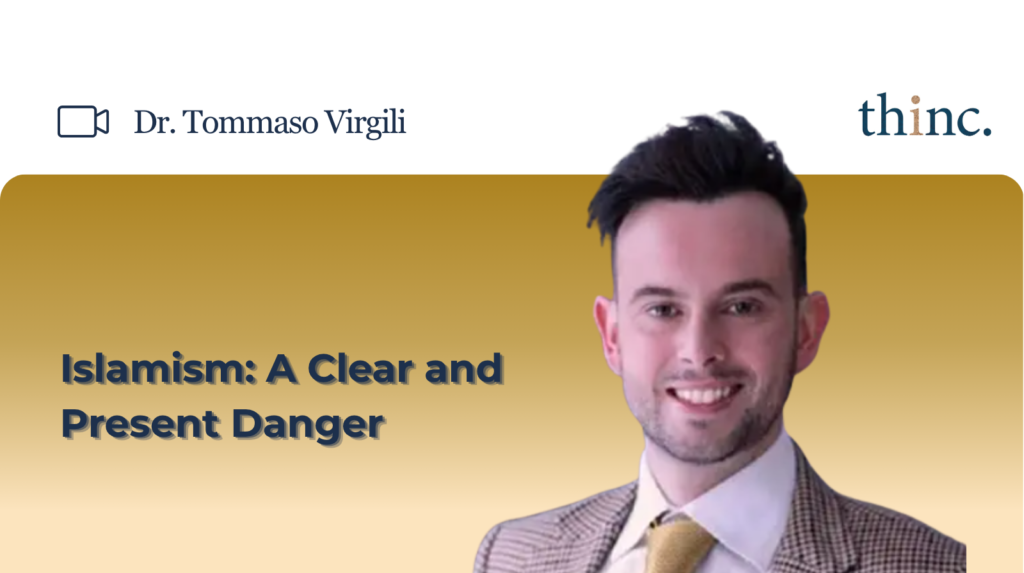
By Dr. Tommaso Virgili
Islamism, or political Islam, is a form of totalitarianism. It is a political ideology that seeks to organize all public authority and social life in accordance with Islamic law.
While Islamic thought itself contains diverse theological and jurisprudential traditions, Islamist movements combine a social program of religious and moral regulation with political strategies aimed at subjecting state institutions and the wider political culture to God’s law. Islamism should be analyzed not simply as a religious phenomenon, but as a political project that seeks to infiltrate and erode pluralist and liberal democratic systems.
Islamic concepts are pathways on a long-term project of entrenching Islamic political and social power. Some Muslim Brotherhood Sunni Islamist actors use democratic participation, civil-society engagement, and the language of moderation in instrumental ways, while ultimately advancing illiberal ends. Within that framework, wasatiyya, or the “middle way,” is a rhetoric that is used as a deceptive tactical façade, to broaden cultural influence, despite the influences of antisemitism, critical attitudes toward liberal rights, and the use of violence. Islamists talk about democracy, but what they really mean is the outer “shell,” not the true meaning and content of liberal democracy and human rights.
Watch Dr. Virgili’s fascinating lecture at the 2026 Hague Symposium here: