By Andrew Tucker, Director General thinc.
On June 26, 2026, representatives of Israel and Lebanon signed a landmark “Trilateral Framework Agreement” in Washington.
This is the most significant accord between the two countries since their armistice seventy-seven years ago, and the first since the short-lived May 1983 peace agreement.
The signing came after a rocky fifth round of negotiations, originally expected to produce only a lesser “statement of intent.” That it went further reflects the ambition of all parties involved, including the United States as mediator and co-signatory.
According to thinc. Senior Fellow Prof Gregory Rose, the agreement is a remarkable achievement. But it should also be noted that it does not have the status of a binding treaty between states. Rather, it is a government-to-government agreement more akin in status to a Memorandum of Understanding.
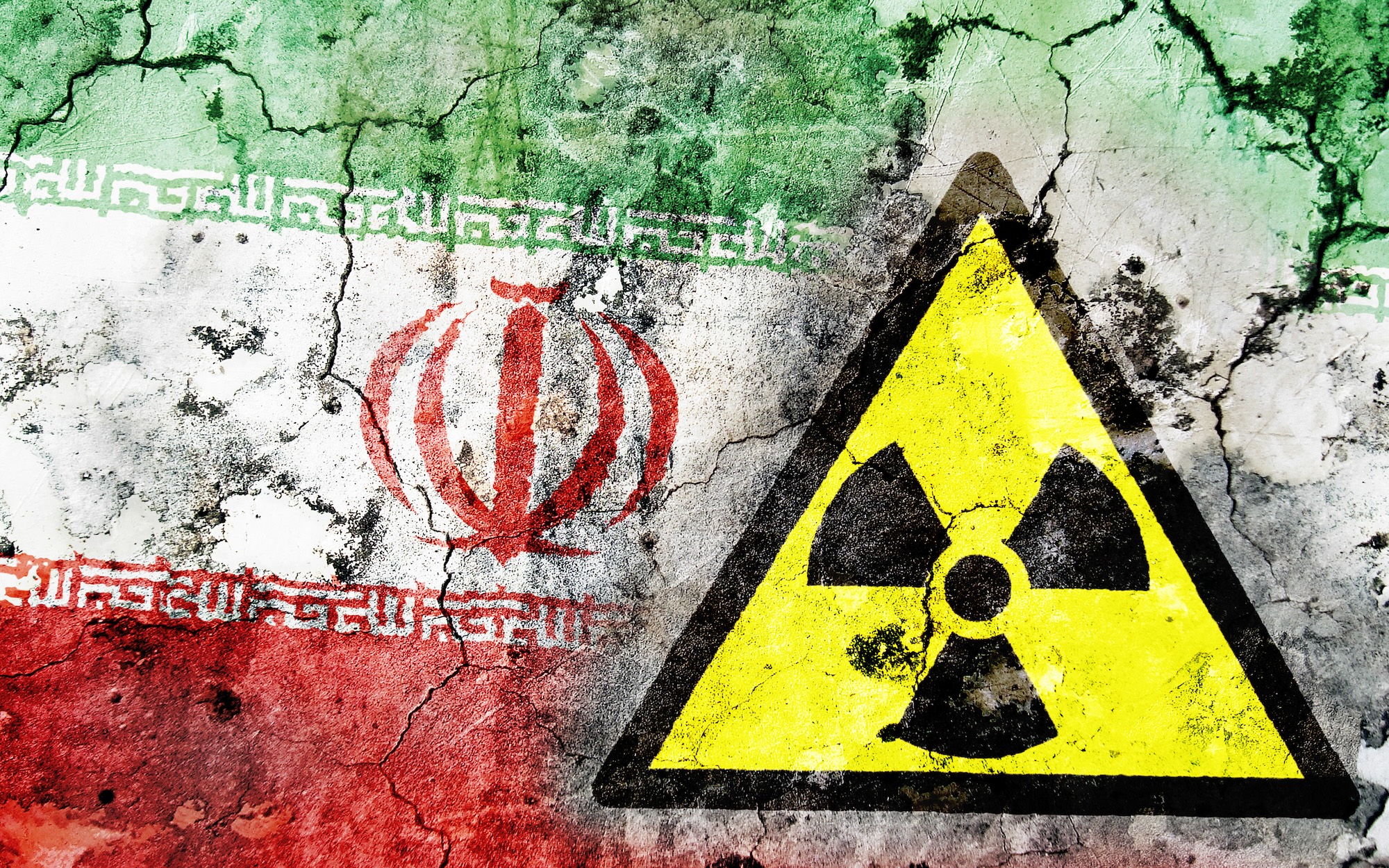
Whether the agreement will result in durable peace between the countries depends on many factors, including whether the Lebanese government has the political will and military strength to disarm Hezbollah. This is a huge task, given that Hezbollah is deeply embedded in Lebanese society and still has significant military capacities notwithstanding Israel’s successful operations in recent year to weaken Hezbollah. This in turn depends on whether Iran can be prevented from supporting Hezbollah; and that is not at all self-evident. Indeed, the recent US-Iran Memorandum of Understanding points in the opposite direction, giving the IRGC a new opportunity to recover financially and renew its monetary and military support of the revolutionary regime’s proxies, including Hezbollah.
The fact that the Iran-US MOU and the Israel-Lebanon Framework Agreement were signed within days of each other reflects the internal contradictions within the Trump Administration. As TWI’s Robert Satloff has commented:
“As much as the framework agreement is a signal success for U.S. diplomacy—and especially for Secretary of State Marco Rubio—it has also laid bare an internal U.S. debate over whether Iran is solely part of the problem in the Middle East or possibly part of the solution. This is often depicted as a contest between Rubio and Vice President JD Vance, the lead defender of the U.S.-Iran MOU. As of this writing, President Trump has not publicly commented on the Lebanon agreement, though paragraph 14 expresses “deep appreciation” for his “vision and leadership.” This may suggest he is not yet ready to offer a definitive verdict on the issue—a potential source of concern for both Israel and Lebanon, despite Trump’s reportedly warm weekend phone call with Aoun.”
Content of the Framework Agreement
The agreement’s fourteen points are anchored in a single overarching goal: full peace between Israel and Lebanon. The word “peace” appears ten times in the text, and the two sides committed immediately to begin drafting a “comprehensive peace and security agreement.” This dispels any ambiguity about whether Lebanon was seeking a more limited outcome, such as a renewed armistice or nonbelligerency arrangement.
The operational core of the deal is a reciprocal, sequenced process: the Lebanese Armed Forces (LAF) will deploy into defined areas of southern Lebanon, disarm and dismantle Hezbollah and its infrastructure, and restore Lebanese state sovereignty — and as they do, Israeli Defense Forces (IDF) will progressively withdraw. IDF withdrawal is explicitly conditional on verified LAF progress, not automatic. The agreement introduces “pilot zones” in the South Litani Sector as the mechanism for this phased process, with additional zones to be added by mutual consent.
Disarmament and dismantlement are defined in a security annex to mean taking legal measures against non-state armed personnel and destroying weapons caches, tunnels, command centers, and associated infrastructure. Critically, incorporating Hezbollah units into the LAF is explicitly ruled out. Lebanon also committed to cutting off Hezbollah’s financial lifelines, pledging to prevent reconstruction funds and other money from flowing to the group or affiliated entities.
Two uses of the word “irreversible” in the text are notable: one referring to progress toward comprehensive peace, the other to Lebanon’s commitment to restoring full sovereignty. This language, unprecedented in Arab-Israeli agreements, signals the gravity of the undertaking.
The United States plays a deep and indispensable role — not merely as broker but as active participant in verification, military coordination, reconstruction support, and financial enforcement. A joint “Military Coordination Group for Lebanon” (MCG4L) will operate around the clock to manage deconfliction and implementation.
The agreement is a direct repudiation of Iran’s claim to a security role in Lebanon. Hezbollah and its allies have already denounced the deal in extreme terms, with Hezbollah threatening street violence and parliamentary speaker Nabih Berri calling it “sedition.” Lebanon’s president and prime minister took a significant political risk in signing, banking on Washington and Jerusalem rather than Tehran.
According to Washington Institute scholar Robert Satloff, the agreement offers a once-in-a-generation opening for genuine peace, but the path is fragile. Swift, visible implementation is essential given Iran’s determination to undermine the deal. A crucial missing piece, Satloff argues, is a public, full-throated endorsement from President Trump — which could decisively tip the balance in favor of the agreement’s proponents.
Lessons from the 1983 Peace Agreement
Brokered by U.S. Secretary of State George Shultz, the 1983 Peace Agreement was signed by Israeli and Lebanese representatives and called for Israeli withdrawal from Lebanon in exchange for normalized relations, security arrangements in southern Lebanon, and an end to the state of war between the two countries. It was a significant diplomatic achievement on paper.
It collapsed within a year, and Syria was the primary reason. Hafez al-Assad regarded the agreement as a U.S.-Israeli imposition that would bring a pro-Western, Israel-friendly government to Lebanon’s doorstep — directly threatening Syrian regional influence. Syria refused to withdraw its own forces from Lebanon as the agreement envisioned, and actively armed and supported Lebanese opposition factions (Druze, Shia, and Palestinian groups) to destabilize the Gemayel government that had signed it.
Domestically, the Lebanese government lacked the authority to enforce anything. The country was still deep in civil war, and large segments of the Muslim and Druze communities opposed the deal. Meanwhile, the October 1983 suicide bombings that killed 241 U.S. Marines and 58 French paratroopers shattered Western resolve to stay engaged. The Reagan administration pulled U.S. forces out of Beirut in early 1984, removing the external security guarantee the agreement depended on.
With Syrian pressure mounting and American backing gone, Lebanese President Amine Gemayel formally abrogated the agreement on March 5, 1984. It never took effect.
The parallels to today’s framework are obvious — which is why Satloff’s point about the need for sustained, visible U.S. commitment carries so much weight.